
Please complete the form below


Southampton is the largest city and port on the south coast of England. Tour the historic byways of Old Town with its Medieval walls and Tudor architecture. Spend an hour or two meandering along the pathways of Royal Victoria Country Park, picturesquely set along the waterfront on the grounds of a former military hospital where Florence Nightingale once worked. Southampton’s maritime past can be explored by strolling along the Town Quay with its marina and lively bars and restaurants. It was here that the Titanic departed on its fateful journey and where the Mayflower sailed for the New World.
The peaceful setting of the picturesque port of Honfleur along the Seine attracted many artists and writers over the years, including English painter Bonington, French painter Boudin, French poet Charles Baudelaire and later the members of Impressionist Painters. Throughout its history, numerous maritime journeys were initiated from Honfleur. It is especially known for its old, beautiful picturesque port, characterized by its houses with slate-covered frontages.
St. Peter Port is the capital of Guernsey, as well as the main port of the island. In Guernesiais and in French, historically the official language of Guernsey, the name of the town and its surrounding parish is St Pierre Port. As well as being a parish, St. Peter Port is a small town consisting mostly of steep narrow streets and steps on the overlooking slopes.
Explore this fascinating fortified town or discover the lovely medieval town of Dinan and its impressive clock tower and picturesque half-timbered houses. Drive along the rugged Brittany coast and savor the stunning view of mystical Mont St. Michel before wandering through its steep winding streets and the mazelike abbey passages.
Bordeaux is located near the European Atlantic coast, in the north of the Aquitaine region in France. The city is built on a bend of the river Garonne, with the city literally divided into two parts. The world’s wine capital, Bordeaux has about 60 appellations, 9,000 wine-producing châteaux, and 13,000 grape growers. With an annual production of over 700 million bottles, Bordeaux produces large quantities of everyday wine as well as the most expensive ones.
Bordeaux is located near the European Atlantic coast, in the north of the Aquitaine region in France. The city is built on a bend of the river Garonne, with the city literally divided into two parts. The world’s wine capital, Bordeaux has about 60 appellations, 9,000 wine-producing châteaux, and 13,000 grape growers. With an annual production of over 700 million bottles, Bordeaux produces large quantities of everyday wine as well as the most expensive ones.
Tucked in France’s Côte Basque, Biarritz first came to prominence in the mid-19th century when Napoleon III built a summer palace here for his wife, Empress Eugenie. The oceanside palace is now the esteemed Hotel du Palais, a landmark for the dynamic, beach-rimmed Biarritz. Surfing in France originated here in the late 1950s, and the sport has become synonymous with the city. You might watch surfers riding the waves that funnel into the Bay of Biscay, or simply comb the lovely beaches. Biarritz also has an urbane personality and museums dedicated to everything from Asian art to chocolate. Don’t miss the blue-domed Russian Orthodox Church, built for visiting Russian aristocrats in the 19th century. Pedestrian-friendly Biarritz is lined with fashion boutiques and shops selling French cheeses, wine, porcelain dolls, and Basque tablecloths. Enjoy Basque-influenced cuisine such as veal stew, cured ham dishes, tapas and foie gras.
Bilbao straddles the Bilbao or Nervión River some 15 miles from the Cantabrian Seacoast. An industrial city, the metropolitan area ranks among Spain’s most important commercial and financial centers. Proximity to the sea and early discovery of vast mineral deposits led to the development of the port. The modern city center is El Ensanche (literally “the expansion”). Possibly the newest source of great local pride is the remarkable Guggenheim Museum-Bilbao.
Legend states that Ulysses founded Lisbon, calling it Olisipo. Others claim that the name is Phoenician, but all agree it’s one of Europe’s most fascinating destinations. On All Saints’ Day in 1755 a devastating earthquake destroyed much of the city. The Baixa (Lower City) was rebuilt on neo-classical lines that still form the heart of the city. The elegant ‘City of Explorers’overlooks the River Tagus, and offers a number of distinctive neighborhoods to discover. Tour the Alfama, where the winding streets still retain much of their Moorish atmosphere. Stroll to Bairro Alto and hear the melodious sounds of Portugal’s Fado music. Nearby excursions transport you to the lavish 18th-century palace of Queluz and Sintra’s Royal Palace.
Framed by golden sands and impressive cliffs, Portimão offers a relaxing beach getaway for sun-seekers. For lovers of history and architecture, take a stroll through the medieval Castle of Alvor, and for those that enjoy the beauty of nature delight in the cultivated fields and slopes covered with pine trees and wildflowers. Visit the Igreja da Nossa Senhora da Conceição that dates back to the 14th century. After a devastating earthquake it was restored with an altar made from walnut wood and the interior walls that feature religious depictions in azulejos tiles. Bring home traditional lace, ceramics, leather goods and baskets.
Cádiz, Andalusia’s world-renowned capital, has undergone major restoration in recent years. Palm trees, gracious squares, flower-filled parks, ubiquitous red-tile roofed buildings, and bustling street markets make this a most delightful port. The old town, on the tip of the peninsula, is buzzing with beautiful, lively plazas. To get there, you pass through the new town, an elegant metropolis with excellent beaches. Cádiz is also a good starting point for a day trip to nearby Seville, where you can visit the Alcazar, a beautiful medieval Islamic palace showcasing a unique fusion of Christian and Moorish architecture surrounded by lovely gardens; majestic Seville Cathedral (Catedral de Sevilla); and Giralda Tower, offering excellent photo opportunities.
Explore the Mendoubia Gardens which contain a fascinating banyan tree that is more than 800 years old. The Caves of Hercules are 9 miles west of Tangier in the Cap Spartel area; it is a place of great beauty and archeological significance.
Situated on Spain’s Costa del Sol, Malaga is the region’s capital and a popular holiday destination. The city is also renowned as the birthplace of Pablo Picasso, whose works can be seen in the fairly new Museo Picasso housed in the Palacio de Buenavista. And connoisseurs can imbibe in the sweet Malaga dessert wines that come from the hilly vineyards just outside of town. This is a pleasant town to explore and also serves as a popular starting point for excursions to splendid Granada and the famed Alhambra, located inland at the foothills of the Sierra Nevada.
Cartagena is a Spanish Mediterranean city with more than 2,500 years of history. Each corner, street and square offers travelers monumental examples of its splendorous historical past. The origins of the city are shown at the Punic Wall, which marks the foundation of the city by the Carthaginians in 227 BC. Cartagena has been the capital of the Spanish Navy’s Maritime Department of the Mediterranean since the arrival of the Spanish Bourbons in the eighteenth century.
There is something for everyone in Alicante. The historic Mediterranean port city is located in renowned Costa Blanca, within the region of Valencia. From outdoor cafés to white-sand beaches to museums that house rare masterpieces, this town has everything one would expect of a Mediterranean escape. Be sure to visit the picturesque town of Guadalest, one of the most unique destinations in all of Spain.
Ibiza is often called the “White Island” due to its abundance of whitewashed houses. Part of the Balearic Islands, it is covered with limestone hills and topped by lush pine forests. Winding lanes take visitors through cobbled streets to admire the stunning views across the bay or to a blissful calm amidst the action. Designer shops, fine restaurants, neighboring beaches and a thriving nightlife add to the excitement Ibiza has become world famous for.
Mallorca, also known as Majorca, is a wind-swept island with steep jagged cliffs and olive groves more than a thousand years old. Mallorca is an island of contrasts. To the south is a busy tourist area with hotels, bars, restaurants, shopping and dazzling night life. To the north are rocky valleys, sleepy villages shrouded in bougainvillea, and breathtaking views. Palma is dominated by the breathtaking Gothic Cathedral, located high above the waterfront on the site of a former mosque.
One of Europe’s most visually stunning cities, Barcelona balances the medieval intimacy of its Gothic Quarter with the grace and distinction of the wide boulevards in the Moderniste Eixample. It was the home of architect Antoni Gaudí, whose Sagrada Familia Cathedral, Park Güell and Casa Milà are the most profound statements of Modernisme. View the splendid works at the Picasso Museum and the Miro Foundation, or discover Barcelona’s passionate ambiance at a flamenco show.
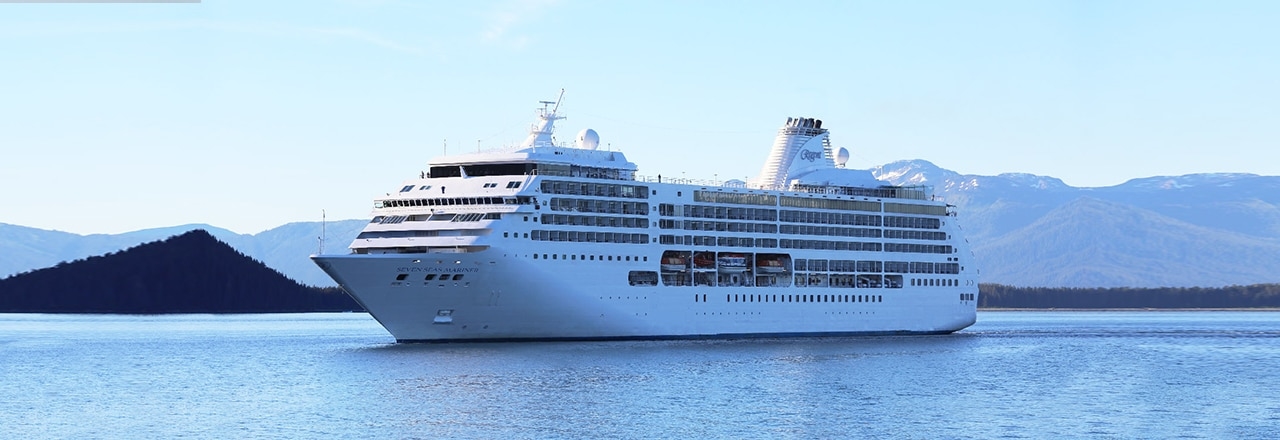
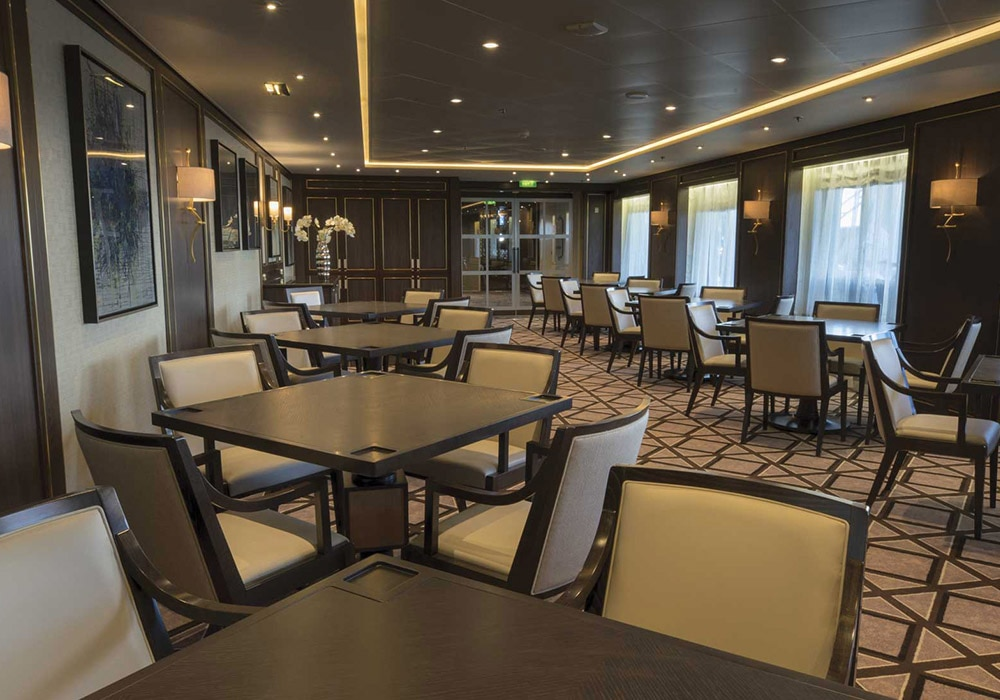
The world’s first all-suite, all-balcony ship, Seven Seas Mariner features four gourmet restaurants with open seating. Hallmarks include generous amenities and a welcome spaciousness. Catering to only 700 guests, her staff-to-guest ratio of 1 to 1.6 ensures the absolutely highest level of personal service.
Golf Nets
Library
Nightclub
Outdoor Pool
Shuffle Board
Table Tennis
24-hour Room Service
Bar
Compass Rose Restaurant
Horizons Lounge
La Verandah Buffet
Lattitudes
Lounge
Pool Grill
Poolside Grill
Prime 7
Signatures Restaurant
Computer Learning Centre
In room access to E-mail
Internet Access Lounge
Internet Cafe
Boutique
Laundry Service
Medical Centre
Observation Lounge
Photo Shop
Shore Excursion Office
Aerobics/Yoga
Fitness Center
Gym
Jogging Track
Beauty Salon
Sauna
Spa
Whirlpool
Cabaret & Stage production
Cigar Bar
Theatre
Please complete the form below