
Please complete the form below

Venice, a romantic MSC Mediterranean Cruises destination, is an artisan masterpiece. The city is built on 118 small islands, separated by canals, in a shallow lagoon in the Adriatic Sea. This UNESCO World Heritage Site overflows with beauty – from the gondola-lined canals and ancient marble palaces to historical architectural feats like St. Mark’s Basilica and the Palazzo Contarini del Bovolo. Visiting Venice is like being in a fabled land, a scintillating mix of culture, history, and water.
Messina may well be your first sight of Sicily, and – from your MSC holiday cruise ship – it’s a fine one, the glittering town spread up the hillside beyond its sickle-shaped Mediterranean harbour.
On a shore excursion you can discover Messina’s most important monument, the Duomo, which epitomizes the city’s phoenix-like ability to re-create itself from the ashes of its last disaster. It’s the reconstruction of a twelfth-century cathedral erected by Roger II, one of a series of great Norman churches of Sicily that include the sumptuous cathedrals of Palermo and Cefalù. The Duomo’s detached campanile, or bell tower, claims to be the largest astronomical clock in the world, and puts on its best show at noon every day, when a bronze lion (Messina’s ancient emblem) unleashes a mighty roar over the city that can be quite alarming if you’re not expecting it!
Just back from the Duomo, the truncated section of the twelfth-century Chiesa Annunziata dei Catalani squats below pavement level, and is Messina’s only surviving example of Arab/Norman church-building.
When you are cruising the Mediterranean Sea with MSC Cruises, the most obvious excursion from Messina is to the almost too charming hill town of Taormina, spectacularly located on a rocky bluff between the Ionian Sea and the soaring peak of Mount Etna, whose summit with its bleak lava wilderness is one of the most memorable landscapes Italy has to offer.
Once the beloved retreat of poets and writers, Taormina is now the most illustrious resort on the entire island, captivating its visitors with its famous ancient theatre, grand hotels and engaging small-town charm.
Naples is a large, sprawling Mediterranean port, with a centre that has many different focuses just waiting to be discovered on an MSC Mediterranean cruise excursion.
No trip to Naples is complete without visiting the area between Piazza Garibaldi and Via Toledo, roughly corresponding to the old Roman Neapolis (much of which is still unexcavated like in many other Italian cities).
The old part of Naples – the centro storico – is formed by the main streets of Via dei Tribunali and Via San Biagio dei Librai (the latter also known as “Spaccanapoli” as it literally splits Naples in two), which still follow the path of the ancient Roman roads. This is much the liveliest and most teeming part of Naples, an open-air kasbah of hawking, yelling humanity that makes up in energy what it lacks in grace. But it’s the city’s most intriguing quarter, and a must-see on any cruise to Naples. The Duomo is a Gothic building from the early thirteenth century (though with a late nineteenth-century neo-Gothic facade) dedicated to the patron saint of the city, San Gennaro.
MSC Mediterranean cruises also offer excursions to Pompeii. One of Campania’s most important Roman commercial centres – a moneyed resort for wealthy patricians and a trading town that exported wine and fish – the eruption of Mount Vesuvius in AD 79 in effect froze the town’s way of life as it stood at the time.
Trips can also be taken to the island of Capri, place of legend, home to the mythical Sirens and a much-eulogized playground of the super-rich in the years since – though now it has settled down to a lucrative existence as a target for day-trippers from the mainland.
Definitely worth a visit, but these days the origins of much of the purple prose may be hard to find.
Discover the culture and colour of Civitavecchia, an MSC Mediterranean Cruises destination. This Italian gem is an enjoyable flight from many European and non-European cities. Celebrated for its 16th-century Michelangelo Fort, ancient Taurine Baths, and marble Vanvitelli fountain, the port is a convenient starting point for visiting Rome, Italy’s regal and romantic capital.
One of the busiest cruise ports in the Mediterranean, the seaside city of Barcelona is known for its iconic architecture, colourful culture, and world-class drinking and dining.
Explore Antoni Gaudí’s surreal Sagrada Família, the famous boulevard of the Ramblas, the medieval Barri Gótic, and the Museu Picasso. But there’s even more to discover in this sprawling Spanish city, an MSC Mediterranean Cruises destination: from hidden tapas bars and fabulous food markets to Europe’s biggest football stadium.
Cádiz is among the oldest settlements in Spain and one of the country’s principal ports.
On an MSC Mediterranean cruise excursion, you can visit its old town, built on a peninsula-island, and remaining much as it must have looked in those days, with grand, open squares, sailors’ alleyways and high, turreted houses.
Literally crumbling from the effect of the sea air on its soft limestone, it has a tremendous atmosphere – while slightly seedy, definitely in decline, it is nevertheless full of mystique.
The Museo de Cádiz, the province’s most important, overlooks the leafy Plaza de Mina and incorporates the archaeological museum on the ground floor with many important finds and artefacts from the city’s lengthy history. Almost irresistible, even if you don’t normally go for High Baroque, is the attraction of the huge and seriously crumbling eighteenth-century Catedral Nueva.
Cádiz is one of Spain’s top holiday cruise destinations for its cathedral, too, decorated entirely in stone, with no gold in sight, and in absolutely perfect proportions. On the edge of the Barrio del Populo, the city’s oldest quarter dating from the Middle Ages, lies the “old” or original cathedral, Santa Cruz.
This was one of the buildings severely knocked during the English assault on Cádiz in 1596, causing the thirteenth-century church to be substantially rebuilt. A fine Gothic entry portal survived, and inside there’s a magnificent seventeenth-century retablo with sculptures by Martínez Montañés. A first-century-BC Roman theatre has been excavated behind.
Much closer to us in time, instead, is the eighteenth-century mansion, Torre Tavira, with the tallest tower in the city, from where there are great views over the rooftops to the sea beyond. In addition, one of the most impressive Baroque buildings in the city, the chapel of the Hospital de las Mujeres, houses a brilliant El Greco painting.
Santa Cruz de Tenerife is the port capital of Tenerife, the largest of Spain’s seven Canary Islands. The city showcases incredible sights such as the Plaza de Espana, the church of St. Francis of Assisi, and the soaring white wave auditorium, the Auditorio de Tenerife. This quintessential Canary Island’s town is a colourful MSC Mediterranean Cruises destination where you can soak up the sun, dine in style, or take a dip in glittering waters.
High above the enormous bay of Todos os Santos (All Saints), where your MSC cruise ship awaits your return, Salvador de Bahia has an electric feel from the moment you arrive.
This is the great cultural and historical centre of Brazil, where Afro-Brazilian heritage is strongest and where capoeira, candomblé and samba de roda were created.
MSC South America cruises offer excursions to the centro histórico of this magical place, a melange of narrow cobbled streets, peeling purple walls, grand Baroque churches, kids kicking footballs, rastas, locals sipping bottled beer on plastic chairs, the wafting aroma of herbs and the almost constant beating of drums, especially as the sun sets. Beyond the old town Salvador is a vast, sprawling city, with a vibrant beach life, modern skyscrapers and plenty of favelas.
The centro histórico is the traditional heart of Salvador; it’s built around the craggy, 70m-high bluff that dominates the eastern side of the bay, and is split into upper and lower sections. Cidade Alta (or simply “Centro”) is strung along its top, linked to the less interesting Cidade Baixa (the old commercial centre, aka “Comércio”) by precipitous streets and the towering Art Deco lift-shaft of the Elevador Lacerda. Cidade Alta is the cultural centre of the city, and the section known as the Pelourinho is the groovy old district with colourful and hilly winding streets, its most vibrant and beguiling neighbourhood.
The best spot to begin a walking tour of the city is at the Praça Municipal, the square dominated by the impressive Palácio do Rio Branco, the old governor’s palace which was in use until 1979. The fine interior is a blend of Rococo plasterwork, polished wooden floors and painted walls and ceilings.
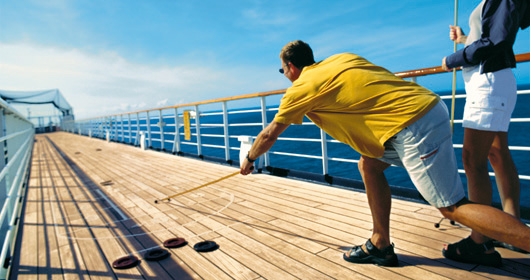
As her name implies, MSC Armonia is a sociable ship with a real fun loving atmostphere. She’s been carefully designed to put passengers first and, make no mistake, she was built for good times! And, best of all, these good times take place against some spectacular backdrops. MSC Armonia operates some of the most interesting and fun loving itineraries of any ship in our fleet. Whether you’re cruising the clement Canary Islands in the winter months, or slipping serenely out of Venice into the Adriatic heading for the best of the Eastern Med’ in the summer, you’re always bound for enjoyment.
MSC Armonia is a great ship to enjoy the company of friends and family whilst enjoying the sunshine at the external spa and swimming pool complex. And, should you find yourself over doing the fine Italian and international cuisine on offer, then you can always make redress at the gym, the Armonia Spa or why not simply dance the night away in the Starlight Disco?
Aside from being thoroughly convivial, MSC Armonia is also a most comfortable ship. She offers a selection of spacious suites with private balconies and splendid views. But, the usual caveat applies: once you’ve cruised in a balcony cabin aboard MSC Armonia you’ll want to keep doing so again and again!
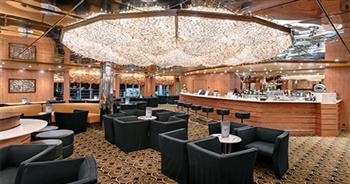
British cruisers especially appreciate the White Lion pub where friendly service and an easy-going charm will quickly turn everyone into a ‘local’. Later on, as you leave the setting sun and another port of call in your wake it’s time to explore the many bars, lounges and, perhaps, a special evening at the Teatro La Fenice?
Whatever you do and wherever you go aboard MSC Armonia, a happy and harmonious cruise comes as standard!
Business Centre
Photo Gallery
Reception
Security Safe
Shopping Gallery
Shops
Gym
Jogging Track
Sports Deck
Card Room
Childrens Play Room
Library
Beauty Salon
Spa
Whirlpool
Bar
Lido Bar
Lounge
Piano Bar
Pizzeria
The Pub
The Restaurant
Children’s Club
Children’s Play Area
Disco
Panorama Lounge
Photo Gallery
Theatre
Please complete the form below